Call: 1-800-832-7191
SOS in Long Island Sound
February 17, 2026
SOS in Long Island Sound: A Wild Ride You Never Want to Repeat
Boaters tell memorable stories, but nothing hits harder than yelling SOS in Long Island Sound on a rough afternoon. The water looks calm until it suddenly changes personality. Moments shift fast. Therefore, preparation always matters. My latest ride delivered a full reminder, and the lesson still stays sharp.
Why Boaters Lose Control Faster Than Expected
Waves rise quickly, and gusts slam hard without warning. Furthermore, equipment often fails at the worst moment. Engines cough, radios flicker, and steering stiffens. Because the Sound sits between weather systems, surprises always arrive fast and furious. Many skippers cruise confidently, yet trouble still waits nearby. The sea never checks your schedule. It simply reacts.
I felt that truth again when the wind swung south. The bow started dancing, and my GPS system blinked repeatedly. Meanwhile, a choppy set rolled over the rail. I pushed forward, yet the steering wheel fought every inch. The hum of adventure quickly shifted into the growl of concern.
How SOS in Long Island Sound Happens Fast
One sharp rattle from below sent the boat quivering. Consequently, my engine sputtered and dropped to idle. I tried a restart, but the engine only coughed. Then another wave slapped hard across the deck. Now the Sound held me firmly, and I knew the moment demanded calm thought. Panic never helps. Steady planning always wins.
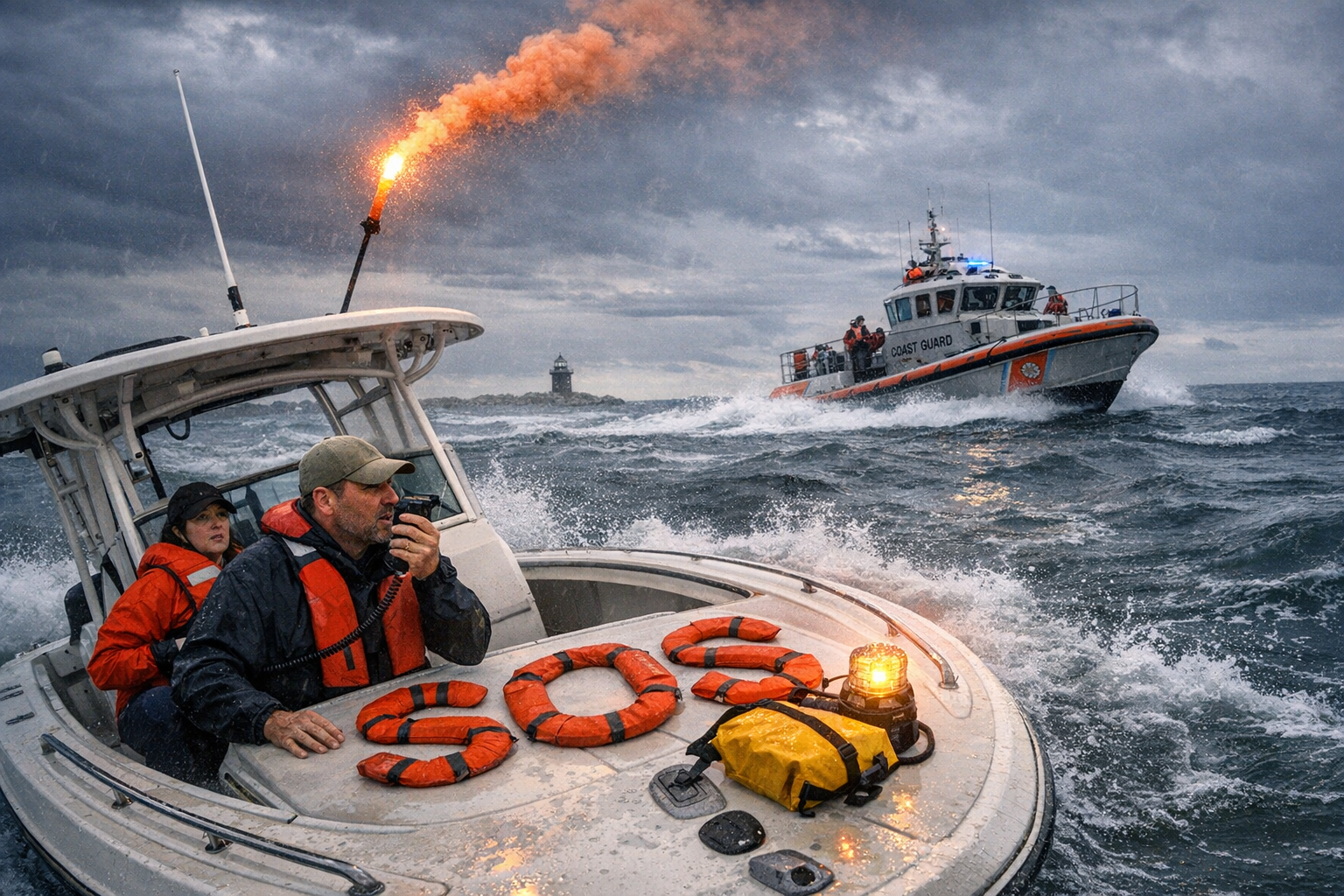
I grabbed the radio because time felt short. Even so, I paused before calling. Many boaters delay this step, yet hesitation rarely helps. Fortunately, training kicked in. I announced, “SOS in Long Island Sound,” stated my position, shared the problem, and kept my voice steady. The message carried, and reassurance arrived fast. The Coast Guard confirmed my location and stayed with me over every minute.
The Sound remained loud, but I no longer felt alone. Confidence returned because help now moved my way.
Gear That Turns Chaos into Control
Boaters often skip simple tools, but solid preparation transforms emergencies. For example, a charged handheld radio saves your day when electronics misbehave. Additionally, a bright strobe helps rescuers lock on your position quickly. A compact ditch bag keeps everything ready without frantic searching. Every item matters when waves toss gear across the deck. Prior to all of this I reviewed the charts. Knowing your charts is more important than you can imagine!
My strobe flashed clearly, and my backup radio stayed crisp. As a result, communication never slipped. A tow vessel appeared sooner than expected because my signal stayed strong. The crew waved confidently, and relief washed over my nerves. They secured my boat and guided me toward calmer water. Strength returned to my shoulders once the tension eased.
Lessons from Every SOS in Long Island Sound
Experiences shape better habits, and this one rewrote several of mine. First, I now check my engine twice before leaving the dock. Second, I glance at the weather radar every hour. Third, I share my float plan with a friend before departure. Fourth, I read my charts. These steps seem small, yet they change outcomes dramatically. Boaters never regret over‑preparing.
The Sound holds beauty, but it also demands respect. Even seasoned captains learn new lessons each season. Consequently, each run builds sharper instincts. You grow faster when you face real challenges. You also gain deeper gratitude for the crews who protect our waterways daily.
Finally, I retold the story to every student in my next safety class. They all leaned forward because real events always teach more than warnings. When I shared the moment I declared SOS in Long Island Sound, several students nodded with recognition. Many boaters know that sinking feeling. They also know the pride that arrives when you handle it well.
A Final Push Toward Smarter Seamanship
Boating creates joy, but responsibility always rides with you. So, prepare wisely. Practice your radio calls. Review weather patterns. Check hidden compartments. Meanwhile, build habits that strengthen your confidence. Emergencies often shrink when you react clearly and quickly. Courage grows from repetition, not luck.
Thanks to training and reliable gear, my emergency ended with a safe tow. The Sound tossed its weight around, but I stayed steady enough to respond. And that small victory keeps me grateful today. Therefore, take every trip seriously. Enjoy the sunshine but sharpen your skills. The water changes fast, and you must adapt just as fast.
Adventure calls often, and Long Island Sound offers plenty of memorable days. Just remember this story when clouds gather near the horizon. Should your next ride surprise you, I hope your preparation turns fear into confidence. You may never want to repeat an SOS in Long Island Sound, but you can handle one if it comes. Long Island Sound Sector emergency line 866-299-8031…you may want to write that down!
If you enjoyed this blog, visit our Boater Blog page.