Call: 1-800-832-7191
History of the Inboard Engine
October 29, 2026
History of the Inboard Engine
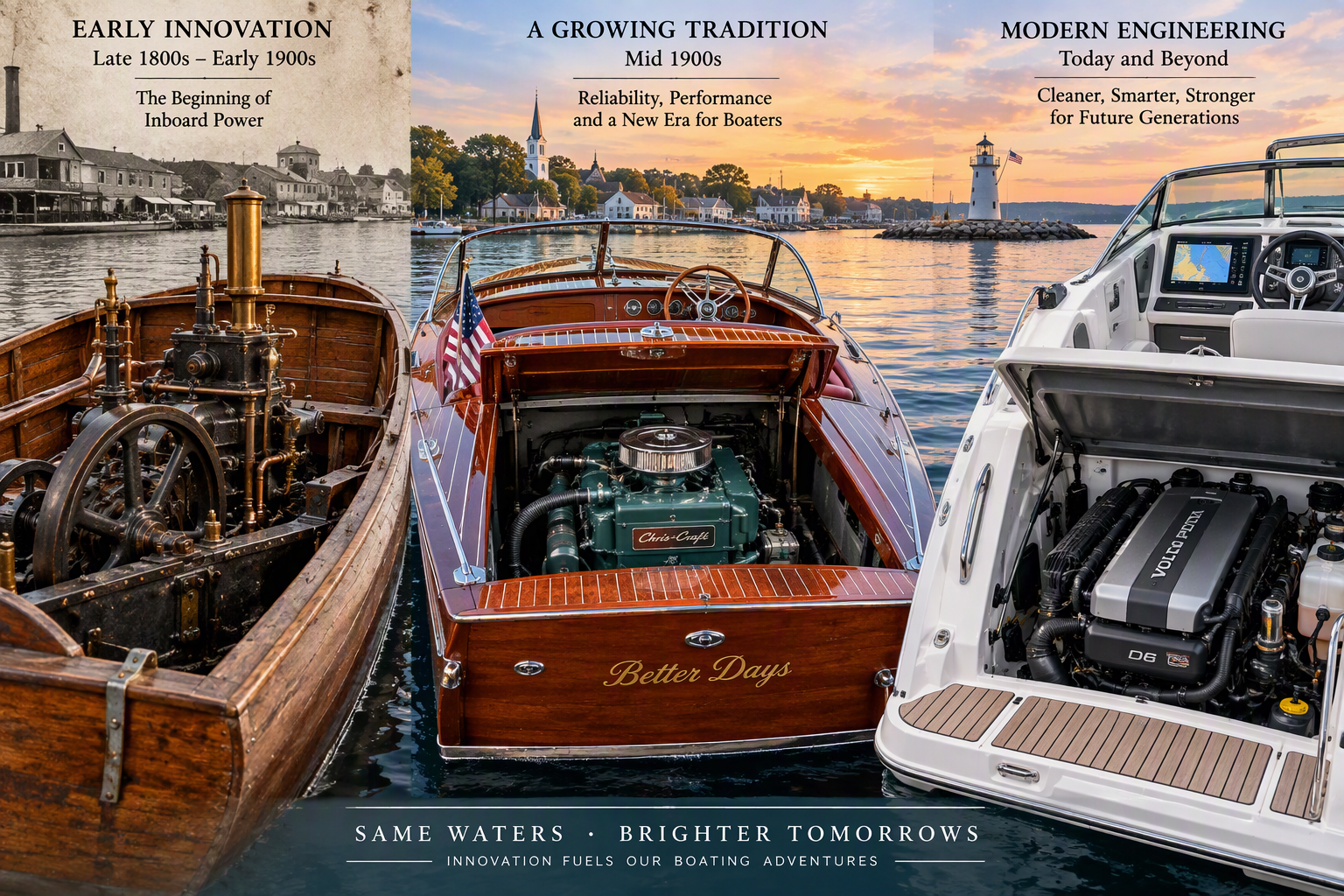
The History of the Inboard Engine reflects one of the most important developments in recreational boating. Before marine engines became common, boaters relied mainly on sails and oars and are still used today. Sometimes not to our liking! However, innovators sought better ways to travel across waterways. As a result, inventors began adapting engine technology for marine use. It was those early experiments that eventually transformed boating forever.
Early Origins of the History of the Inboard Engine
The first marine engines introduced a new level of convenience for vessel operators. Unlike traditional methods, powered boats reduced dependence on wind and physical effort. Boat builders quickly recognized the advantages of reliable onboard propulsion. If cars could use an engine, why not a boat!
Many early systems required constant attention and frequent adjustments. Nevertheless, boaters appreciated the freedom that mechanical power provided and made navigation so much easier. As technology improved, manufacturers developed engines that delivered greater horsepower, dependability and efficiency. Therefore, the popularity of powered boats continued growing throughout recreational boating communities.
How the History of the Inboard Engine Changed Boating
The history of the Inboard Engine demonstrates how innovation influenced vessel design and boating lifestyles. Because engineers placed engines inside the hull, and almost as a side effect, boats gained improved balance and stability. The functionality speaks for itself and enthusiasts gobbled it up. Additionally, designers could create larger and more capable recreational vessels. More people, more cargo, longer distances, and quicker ETAs could not be ignored.
Families soon embraced powered boats for fishing, cruising, and exploration. All the while, manufacturers refined the entire design with better cooling systems, fuel delivery methods, and overall engine performance. As a result, boaters spent more time enjoying the water and less time troubleshooting mechanical issues. You no longer needed to have high-level proficiency in navigation to get offshore and enjoy the water.
Every early boat owner likely carried two items. One item was optimism. The other item was a toolbox! Where do you think the term “swear like a sailor” comes from. 🙂
History vs. Modern Marine Power
Modern marine engines trace their roots to those early innovations. Today, boat builders continue improving performance, reliability, and fuel efficiency. Just like in modern day automobiles, engines are computer monitored for efficiency and provide early detection of issues. Coupled with advanced modern day navigation electronics boaters depart confidently with direction, course lines, headings. and are assured that all maintenance work is up to snuff.
Current recreational vessels benefit from decades of engineering progress. Or shall we say “trial and error” “Eh, what’s the worst that can happen…the boat sinks”. Likewise, modern propulsion systems offer capabilities that early inventors could fathom in their wildest dreams. And with that in mind, many basic concepts remain surprisingly familiar. Today’s boating technology still reflects lessons learned long ago.
Finally, the inboard engine continues inspiring innovation throughout the marine industry to make engines better than last year’s model. Furthermore, we benefit from safer and more dependable propulsion systems every year. Whether operating a classic runabout or a modern cruiser, every recreational captain enjoys the legacy created by generations and generations of marine engineers. We went from conception, to reality, to improving, to finite detail and now the United States Coast Guard has developed standards to make sure we get the best and safest design.
Ultimately, the history of the Inboard Engine reminds us that great boating adventures often begin with a simple idea and the determination to improve it.
Discover all our site has to offer:
Connecticut Boating Certificates Upcoming Courses
Testimonials Archive – Connecticut Boating Certificates LLC
Connecticut Boating Certificates LLC Boaters Blog
The Helm for all boaters CT DEEP, NASBLA, NOAA, USCG, WSIA