Call: 1-800-832-7191
Connecticut Boating Laws Every New Boater Gets Wrong
January 21, 2026
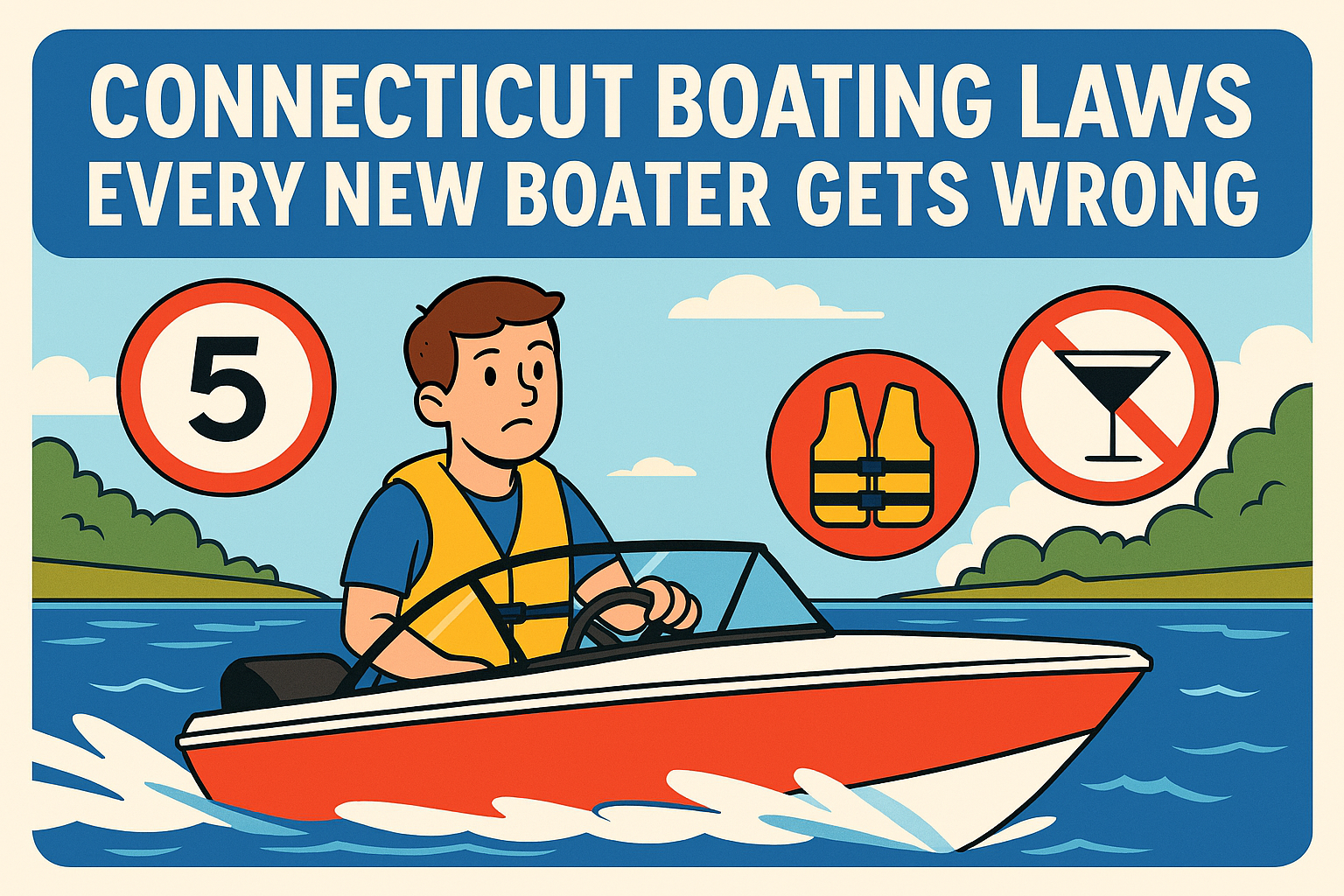
Connecticut Boating Laws Every New Boater Gets Wrong
This blog “Connecticut Boating Laws Every New Boater Gets Wrong” is written because beginners get caught off guard every season. Unfortunately, many new boaters launch confidently without understanding key rules. As a result, simple mistakes quickly turn great days into expensive lessons. Fortunately, learning the rules early keeps trips safe, legal, and enjoyable. Therefore, understanding these laws before you cast off matters.
Many new boaters assume common sense replaces boating laws. Common sense does play a role in boating. However, the water follows strict rules, not dockside logic. For example, speed limits near shore confuse even experienced operators. Likewise, no‑wake zones catch boaters who focus only on open water. Consequently, officers issue citations more often than people expect.
Common Myths That Cost New Boaters Money
Another costly myth involves registration requirements. Some operators believe short‑term use avoids paperwork. Instead, Connecticut requires proper registration before launching on state waters. Additionally, decals and registration numbers must display correctly at all times. Ignoring these details frequently leads to fines. Pay particular attention to the new AIS Stamp for inland boaters.
Safety Rules Boaters Commonly Misunderstand
Life jacket rules confuse nearly everyone at first. Although adults may choose whether to wear one, children face strict requirements. Moreover, Connecticut requires wearable life jackets on vessels under certain lengths. Meanwhile, many boaters store jackets below deck, which breaks the law. Consequently, officers check accessibility first. Jackets must be accessible. Easy rule to remember: 12 and under must have a life jacket on at all times. Good habit to get into: Put your jackets on when you get out of the car. Don’t take them off until you get back to the car. Simple and easy.
Fire extinguisher rules generate similar confusion. Some boaters think small boats avoid equipment laws. However, fuel type, size, and enclosed spaces determine extinguisher requirements. Furthermore, expired fire extinguishers count as noncompliance. That oversight often results in tickets during inspections. Generally speaking, anything required on a boat must meet USCG standards and not be expired.
Connecticut Boating Laws Every New Boater Gets Wrong About Alcohol
Alcohol laws surprise more first‑time boaters than any other rule. Unlike driving, boating enforcement applies broader impairment standards. Therefore, officers can act on visible intoxication alone. Additionally, officers may test operators and passengers during stops. As a result, casual drinking frequently leads to serious consequences.
Open‑container assumptions also mislead many boaters. Some believe passengers can drink freely while anchored. However, navigation status and operator responsibility still apply. Therefore, alcohol remains risky even during relaxed raft‑ups. Smart captains plan sober operation from launch to dock.
New in Connecticut is that both your Driver’s License and your Safe Boating Certificate are subject to reciprocal suspension! Both get suspended if you get a DUI or a BUI.
Right‑of‑Way Errors That Cause Accidents
Navigation rules confuse beginners almost immediately. Although charts help, right‑of‑way follows universal standards. For example, sailboats under sail often have precedence. However, engine use quickly changes those rights. Consequently, misunderstandings cause close calls every boating season.
Crossing situations create the most confusion. When boats approach one another, specific yield rules apply. Unfortunately, many beginners assume first arrival means priority. Instead, relative position determines responsibility. Learning those basics prevents collisions and dockside arguments.
Free and always available is the USCG Navigation Rules. 224 pages.
Connecticut Boating Laws Every New Boater Gets Wrong About Inspections
Many boaters fear inspections because they feel unprepared. However, inspections follow simple checklists. Officers usually begin by checking safety equipment, certificates, and registration. Then, they review operating behavior and equipment condition. Passing stays easy with preparation.
Certificates create the most uncertainty. Some operators believe experience replaces certification. However, Connecticut requires education for specific ages and vessel types. Failing to carry proof can end a boating day early. Printed on your CT Safe Boating Certificate is “Must be carried on board while operating vessel”. Education removes stress from every inspection.
How to Avoid These Mistakes Altogether
Education solves nearly every problem listed here. Rather than guessing, educated boaters know expectations clearly. Additionally, training lowers stress and increases confidence. Consequently, certified operators enjoy more time on the water. Preparation always beats enforcement surprises.
If you plan to boat this season, act early. Certification takes far less time than losing a day on the water. Therefore, learning now prevents problems later. Your future self will appreciate the effort at launch time.