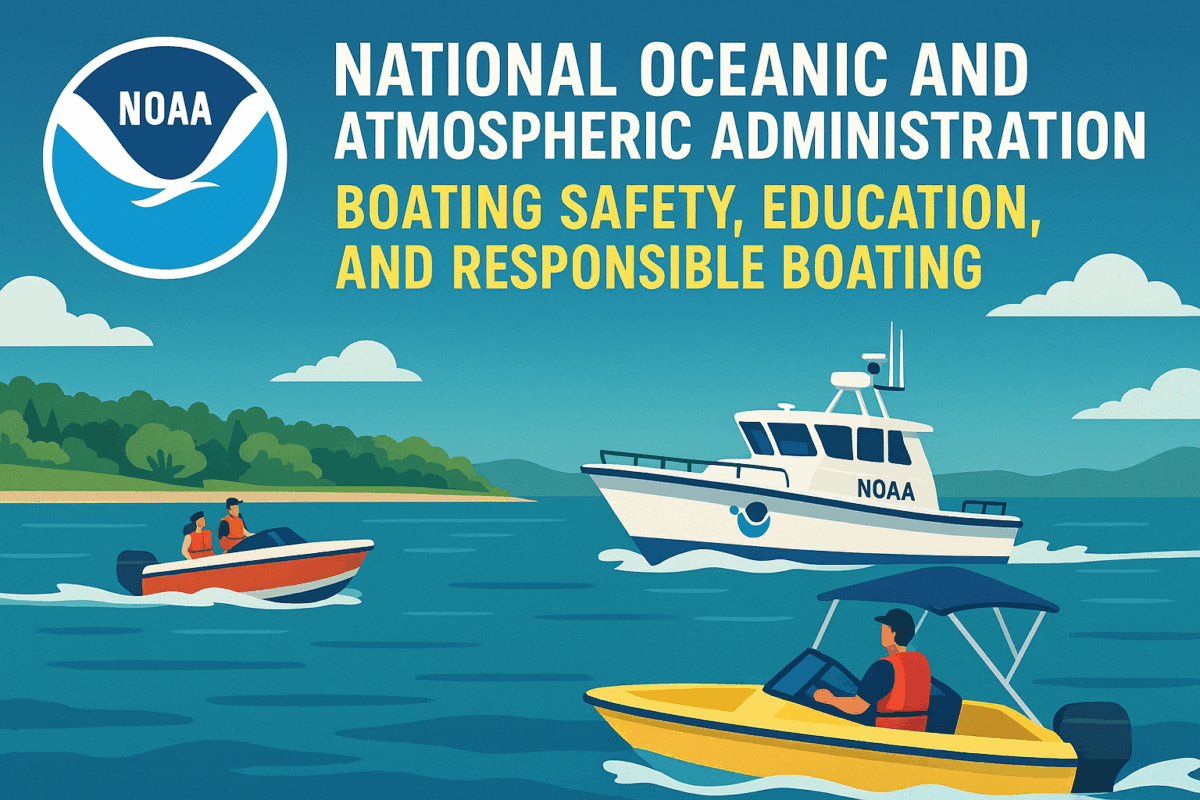
A NOAA patrol vessel monitoring coastal waters, promoting boating safety, education, and certification for responsible and smart boating practices. NOAA Long Island Sound Nautical Charts Overview The NOAA Long Island Sound Nautical Charts image displays detailed electronic chart data for safe navigation across coastal waters. Chart features include depth contours, shoreline details, and aids to navigation. Because accuracy matters, these charts support both recreational and commercial mariners. Navigational Safety Mariners in the image use NOAA ENCs to avoid hazards and plan efficient routes. Real-time positioning enhances safety. As a result, grounding risks decrease. Charting Technology The image highlights NOAA’s shift from paper charts to digital formats. Therefore, users benefit from weekly updates and customizable layouts. Using NOAA Long Island Sound Nautical Charts Understanding NOAA Long Island Sound Nautical Charts helps boaters navigate confidently. Learn more at NOAA Marine Navigation NOAA Chart Number One Overview The NOAA Chart Number One image displays a reference guide showing nautical chart symbols, abbreviations, and terms. It includes side-by-side comparisons of paper and electronic chart symbology. Because clarity matters, this chart helps mariners interpret navigation data accurately. Symbol Reference in Action Mariners in the image use NOAA Chart Number One to identify buoys, depth contours, and restricted areas. As a result, navigation becomes safer. Educational Utility The image highlights how students and instructors use the chart for training. Therefore, it supports both recreational and professional learning environments. Why NOAA Chart Number One Matters Understanding NOAA Chart Number One improves chart reading skills. Learn more at NOAA Chart No. 1. NOAA’s Interactive Global Charts Overview The NOAA’s Interactive Global Charts image displays a digital world map with layered nautical data and real-time satellite overlays. Users can zoom, pan, and select regions to access detailed chart information. Because accuracy matters, the system supports safe navigation and environmental monitoring. Real-Time Data Access Mariners in the image use NOAA’s Interactive Global Charts to view updated ENC data, weather overlays, and oceanographic conditions. As a result, voyage planning improves. Charting Innovation The image highlights NOAA’s shift to digital navigation tools. Therefore, users benefit from weekly updates and customizable chart formats. Why NOAA’s Interactive Global Charts Matter Understanding NOAA’s Interactive Global Charts enhances safety and efficiency. Learn more at NOAA Interactive Catalog. NOAA Coast Pilot Overview The NOAA Coast Pilot image shows a mariner referencing a printed volume alongside electronic charts on a navigation console. The book includes channel descriptions, tide data, and federal regulations. Because accuracy matters, the Coast Pilot supplements nautical charts with critical details. Navigational Support Mariners in the image use the NOAA Coast Pilot to verify bridge clearances and anchorage locations. As a result, voyage planning improves. Historical Significance The image highlights the Coast Pilot’s 200-year legacy. Therefore, it remains a trusted resource for coastal navigation. Why NOAA Coast Pilot Matters Understanding the NOAA Coast Pilot enhances safety and compliance. Learn more at NOAA Coast Pilot. NOAA Homepage Overview The NOAA Homepage image displays a vibrant dashboard featuring weather, climate, ocean, satellite, and fisheries data. Navigation menus highlight NOAA’s mission areas. Because accessibility matters, the homepage offers quick links to forecasts, research, and educational resources. Interactive Features Users in the image explore the NOAA Homepage to access flood mapping tools, hurricane updates, and marine charting services. As a result, decision-making improves. Public Engagement The image shows students, scientists, and boaters using NOAA’s site for learning and planning. Therefore, it supports diverse communities nationwide. Why the NOAA Homepage Matters Understanding the NOAA Homepage helps users stay informed. Visit NOAA.gov for more subjects like NOAA Weather Radio, NOAA Education, BLA Organizations, NOAA 8 Boating Safety Tips, NOAA Be Kind to Nature, NOAA Coast Pilot Books, NOAA Electronic Navigational Charts, NWS Video Library, Climate Data Online, Do We Need Lighthouses, NOAA Blue IQ, Ocean to Atmosphere, Women of NOAA, NOAA Sanctuaries, The Best Weather Website, NOAA Marine Debris Program, NOAA Interactive Maps, ADVs, NOAA's Explainers, NOAA’s SWFO-L1 observatory, NOAA's Wildest Missions, NOAA's Climate Q&A, NOAA Sail Drones, NOAA Planes Inside Hurricanes, NOAA Charting Geodetic Framework, NOAA Deep Ocean Mapping, NOAA NEON Stratus Project, NOAA and Citizen Science, NOAA Animals of the Ice, NOAA Rainforests of the Sea, NOAA AI Driven Models, NOAA Weather Safety, NOAA Origins, NOAA Marine & Aviation, NOAA and Sofar Ocean, NOAA and Ocean Today, NOAA and the NWS, NOAA Ocean Circulations, NOAA Budget Estimates 2026, NOAA Whale Week, NOAA Marine Debris Partnership, NOAA Earth Month 2026, NOAA Sea Turtle's Survival, NOAA Fishing Future Uncertain, NOAA Wetlands Restoration, Marine Debris Technicians, NOAA Whale Tagging, NOAA Trap Removal Program, NOAA 20 Years Marine Debris, NOAA Whale Tagging, NOAA Aircraft Operations Center, NOAA Saving Our Sharks, NOAA Derelict Trap Removal, Right Whale Strikes, NASBLA's Currency Reporting Portal, NOAA Heritage Week 2026, NOAA Marine Debris Program, NASBLA 2026 Annual Report,

NOAA Marine Debris Program

In by admin

Understanding the NOAA Marine Debris Program

The NOAA Marine Debris Program serves as an example of how long-term environmental initiatives can support awareness, education, and stewardship within the maritime community. As organizations reach important milestones, anniversary celebrations often provide opportunities to reflect on progress and future goals. Furthermore, such milestones encourage public engagement and renewed interest in environmental responsibility. As a result, boating enthusiasts, educators, and community members may gain a deeper appreciation for ongoing conservation efforts. Consequently, anniversary events often highlight both accomplishments and future opportunities.

Many boating communities value programs that promote cleaner waterways and responsible recreational practices. In addition, environmental awareness frequently supports safer and more enjoyable experiences on the water. Through education and outreach, organizations help encourage positive habits among participants. Therefore, long-standing initiatives continue to play an important role in fostering environmental stewardship.

Celebrating 20 Years of the NOAA Marine Debris Program

The NOAA Marine Debris Program anniversary provides useful context for discussing how environmental programs evolve over time. Because long-term initiatives often adapt to changing needs, organizations regularly assess strategies and goals. Moreover, milestone celebrations create opportunities to recognize partnerships, education efforts, and community participation.

Educational outreach often remains a central part of successful environmental programs. Likewise, anniversary events frequently encourage reflection on lessons learned and future priorities. When organizations engage communities through awareness campaigns and educational resources, they strengthen public understanding. Consequently, participation and support may continue to grow through ongoing engagement.

How Marine Debris Programs Typically Work

Most environmental initiatives focus on a combination of awareness, education, prevention, and community involvement. For this reason, many programs encourage individuals to understand how everyday actions can affect waterways and coastal environments. Additionally, outreach efforts often provide practical information regarding responsible practices and stewardship.

Community involvement frequently enhances the effectiveness of educational campaigns. Furthermore, organizations often collaborate with partners, volunteers, and recreational users to support broader objectives. Through shared responsibility, participants contribute to cleaner waterways and improved environmental awareness. As a result, programs often build stronger connections between people and the marine environment.

Education Through the NOAA Marine Debris Program

The NOAA Marine Debris Program demonstrates how education can support awareness and encourage informed decision-making. Because people often learn best through engagement and participation, educational initiatives frequently utilize a variety of outreach methods. Moreover, effective communication helps connect environmental concepts with everyday recreational boating activities.

Boating education programs often emphasize personal responsibility and environmental stewardship. Similarly, outreach efforts may encourage participants to consider how small actions contribute to larger goals. Through consistent education, individuals develop a stronger understanding of marine environments. Therefore, educational initiatives remain an important component of long-term success.

Community Participation and Stewardship

Community involvement often strengthens environmental programs and awareness campaigns. Accordingly, organizations frequently encourage participation from boating groups, educational institutions, and recreational users. Collaborative efforts help build a culture of stewardship while supporting shared environmental goals.

Volunteers and community members often contribute valuable perspectives and enthusiasm. Furthermore, public participation helps extend the reach of educational messages throughout boating communities. When individuals engage actively, they reinforce the principles of responsible recreation and environmental awareness. Consequently, community-driven efforts can create lasting positive impacts.

Looking Ahead After 20 Years

Future success often depends on continued education, collaboration, and adaptation. Therefore, the NOAA Marine Debris Program anniversary highlights the importance of maintaining focus on stewardship and awareness. As boating and recreational communities continue to evolve, environmental outreach efforts remain valuable tools for promoting responsibility and engagement.

Long-term initiatives benefit when organizations continue exploring new approaches to communication and education. Additionally, boating safety, environmental stewardship, and responsible recreation frequently work together to support healthier waterways. Through ongoing participation and awareness, communities can help preserve valuable recreational resources. Ultimately, the NOAA Marine Debris Program demonstrates how sustained education and community involvement can inspire meaningful environmental action over time.

Discover all our site has to offer:

Connecticut Boating Certificates Upcoming Courses

Testimonials Archive – Connecticut Boating Certificates LLC

Connecticut Boating Certificates LLC Boaters Blog

The Helm for all boaters CT DEEP, NASBLA, NOAA, USCG, WSIA

Connecticut Safe Boating Class FAQs

Contact Us at Connecticut Boating Certificates LLC