Call: 1-800-832-7191

Rendering Assistance Law & Obligation
August 3, 2026
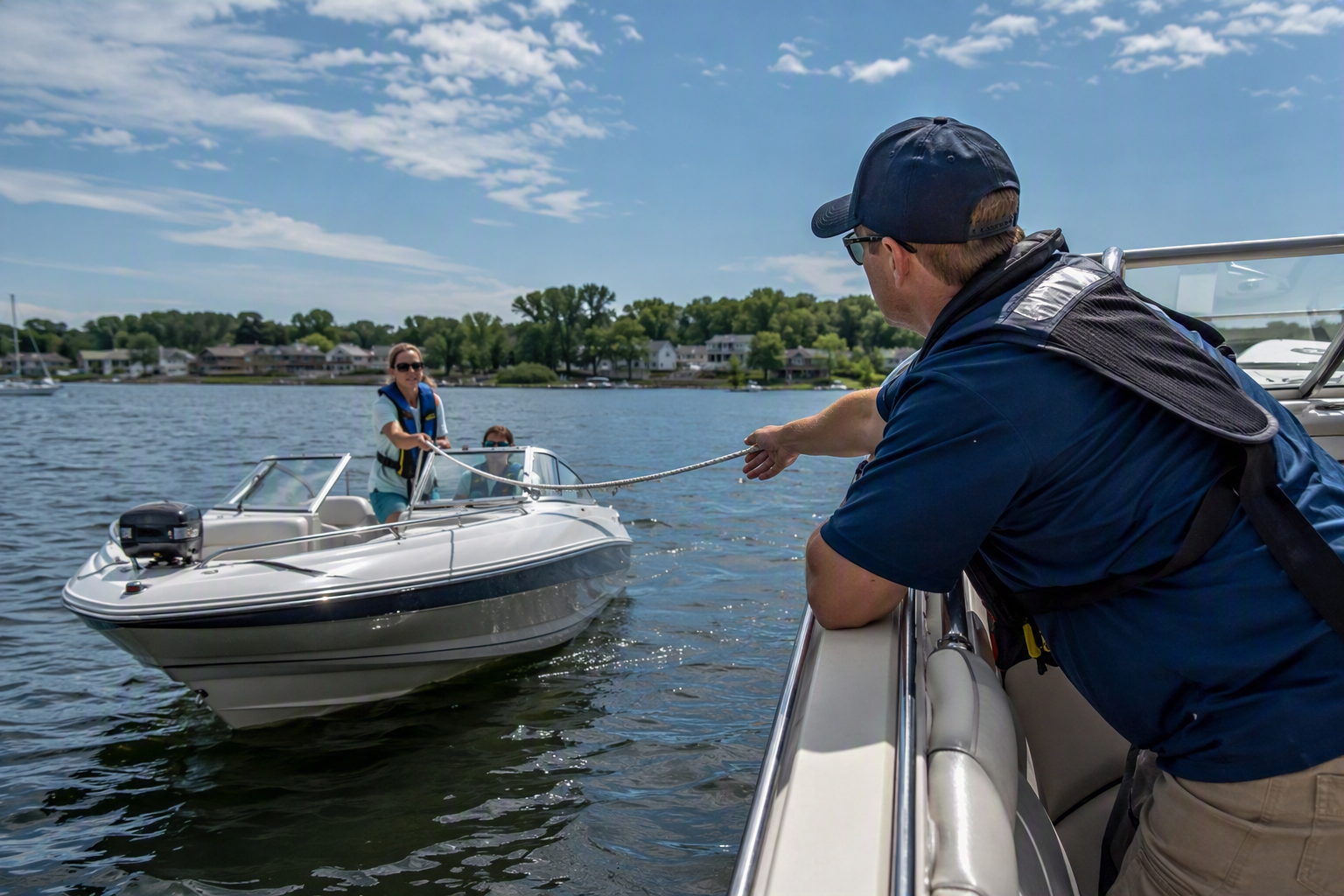
Boaters’ Moral Duty Versus Legal Duty on the Water
Every boater should understand the difference between rendering assistance law & obligation. Personal responsibility and legal requirements. Rendering Assistance often sits at the center of that discussion. Many people view helping others as simple common decency. However, boating laws also establish clear expectations during emergencies. Understanding both perspectives helps boaters make better decisions and promotes safety for everyone on the water.
Boating creates freedom and adventure. Yet it also creates shared responsibilities. Every captain affects nearby vessels, passengers, and waterway users. Therefore, good judgment matters as much as technical skill. While laws provide minimum standards, ethical behavior often reaches beyond those requirements. When it comes to rendering assistance the number one rule is keeping yourself, passengers, crew, and vessel out of danger. Do not make the situation twice as bad.
Understanding the Difference Between Rendering Assistance Law & Obligation
Laws establish the baseline for acceptable conduct. They define actions that authorities can enforce. Example of the law the United States Coast Guard follows when rendering assistance. Ethics, however, reflect personal values and community expectations. As a result, ethical obligations often feel more important than legal duties.
Many boaters believe they should help anyone facing danger. That belief comes from basic human concern. It is our instinct to want to help. However, the law focuses on practical and enforceable standards. Legislators cannot regulate every moral decision. Therefore, boating statutes generally target specific actions during emergencies.
A responsible captain often acts before legal questions arise. For example, many boaters voluntarily check on drifting vessels. Likewise, they may offer a tow when conditions remain safe. Those actions strengthen the boating community. Yet not every helpful action falls under a legal requirement.
Understanding this distinction prevents confusion. Moreover, it helps boaters recognize when a legal duty exists. It also encourages higher standards of conduct. As a result, safer waterways benefit everyone.
Rendering Assistance Law & Obligation: Legal Expectations
Federal boating laws generally require operators to help people in danger. However, that duty applies only when assistance remains reasonably safe. A captain should not create another emergency while attempting a rescue. Therefore, personal safety remains an important consideration.
When distress situations occur, boaters should respond responsibly. There are times when this is not easy. They should assess conditions carefully. Next, they should determine whether help remains possible. If direct action creates excessive risk, they should contact emergency services immediately.
The principle behind Rendering Assistance reflects both safety and responsibility. People on the water often depend on nearby boaters. Consequently, quick action can prevent injuries and save lives.
Most boating laws do not require reckless Hollywood heroics. Instead, they expect reasonable efforts under existing conditions. That distinction matters greatly during rough weather. Likewise, it matters when equipment limitations prevent effective intervention. Because waterways often lack immediate emergency support, nearby boaters play a vital role. Therefore, understanding legal expectations helps captains respond confidently during emergencies.
When Rendering Assistance Becomes a Practical Responsibility
Legal rules provide important guidance. However, real emergencies rarely follow perfect scripts. Boaters must evaluate changing circumstances quickly. As conditions shift, judgment becomes essential. Furthermore, the decision to render assistance becomes the challenge because we must think outside our minds.
A vessel might lose power far from shore. Another boat could strike submerged debris. Sometimes passengers face medical emergencies. In each situation, nearby captains may become the first source of support.
Practical responsibility starts with awareness. Therefore, boaters should remain attentive to surrounding activity. They should watch for distress signals and unusual movements. Additionally, they should maintain communication equipment whenever possible.
Preparation also influences emergency outcomes. For example, proper safety gear improves response capability. Likewise, boating education builds confidence during stressful situations. As a result, trained operators often make better decisions. Many experienced boaters recognize an unwritten community standard. They understand that today’s helper may need help tomorrow. Consequently, cooperation strengthens safety across the entire waterway.
Although the law sets minimum expectations, community values encourage broader engagement. Therefore, responsible captains often provide support whenever conditions allow. That approach benefits individuals and the boating community alike. If assisting another vessel means the loss of life on your vessel, what good have we done.
Balancing Safety, Judgment, and Responsibility
Helping others remains important. However, safe decision-making must guide every action. A captain cannot assist effectively after creating a second emergency. Therefore, careful assessment should occur before any rescue effort.
Weather conditions deserve immediate attention. Likewise, water currents can affect response options. Boat operators should also consider vessel size and equipment limitations. These factors influence what assistance remains realistic. Help if it is safe to do so.
Communication often represents the most valuable first step. For example, a boater can alert authorities and share location details. Additionally, they can maintain visual contact with distressed individuals. Those actions may support a successful rescue effort.
Good seamanship combines legal knowledge with personal responsibility. Therefore, captains should understand applicable boating regulations. They should also develop strong situational awareness. Together, those skills improve safety outcomes. The boating community benefits when operators exceed minimum expectations. However, responsible assistance always requires sound judgment. Legal compliance matters greatly. Yet compassion, preparation, and awareness often make the largest difference during emergencies.
Ultimately, boaters should view safety as a shared responsibility. Laws establish clear requirements and accountability. Meanwhile, ethical choices shape the culture of the water. When boaters respect both principles, waterways become safer, more supportive, and more enjoyable for everyone. Be a smart boater!