Call: 1-800-832-7191

The One Third Rule
May 19, 2026
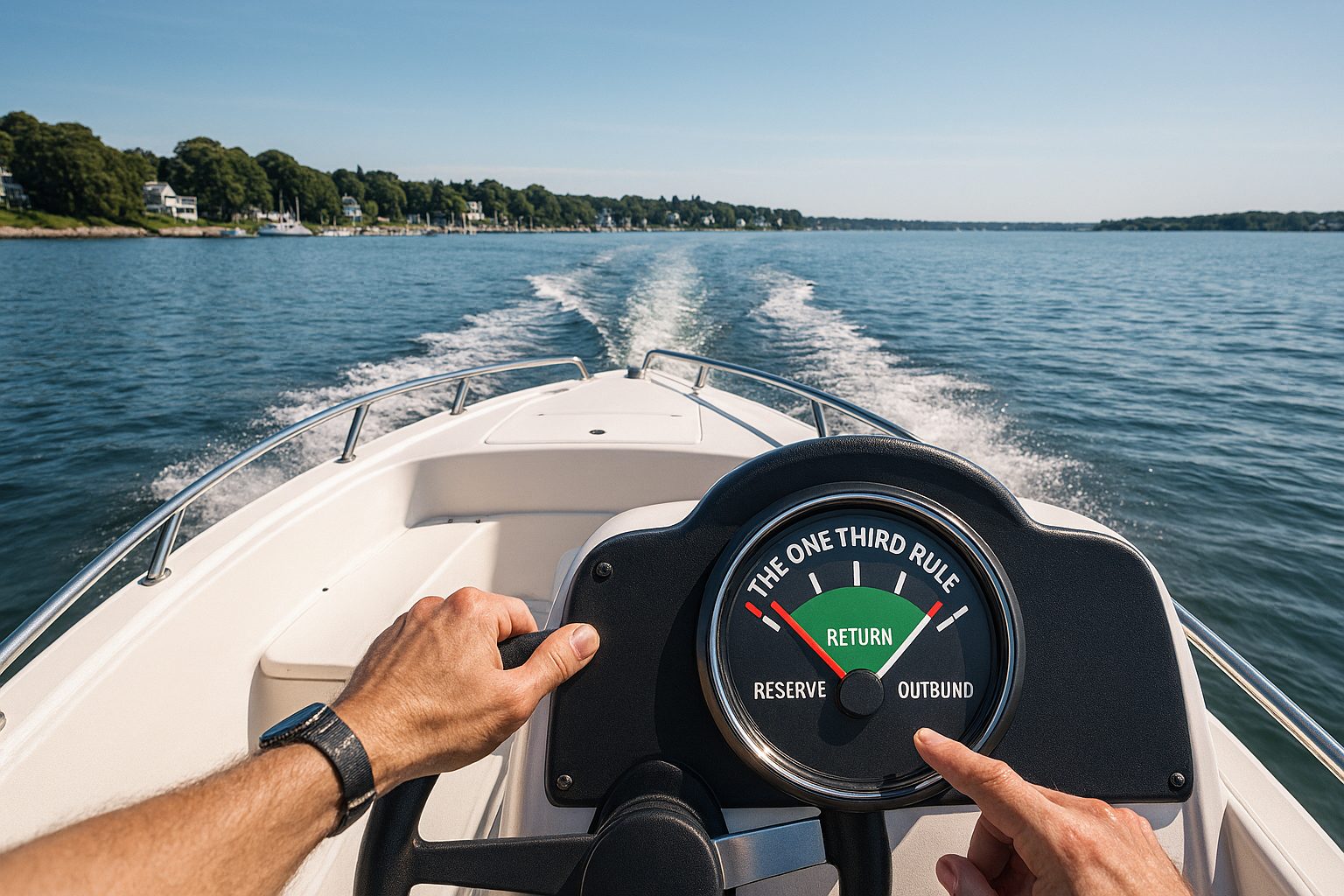
The One Third Rule: Because Guessing Fuel Levels Is Not a Strategy
Boating should feel fun, not stressful, which is exactly why The One Third Rule exists. This simple concept helps boaters manage fuel safely and avoid awkward calls for a tow. Although it sounds obvious, many people ignore it until their engine sputters at the worst time. Fortunately, a little planning can be the difference between a confident cruise or drifting helplessly.
Essentially, you divide your fuel into thirds. One third gets you out to your destination. One third brings you back. The final third stays in reserve for emergencies. While this approach sounds conservative, it protects you from changing conditions and bad decisions. Ouch, yes, I just said that!
Why Boaters Rely on The One Third Rule
First, fuel consumption rarely stays consistent throughout a trip. Wind, current, and weight all affect how much gas your engine burns. Therefore, even a short run can burn fuel faster than expected. By following The One Third Rule, you build in a safety buffer without complicated math.
Additionally, unexpected detours happen more often than people admit. You might explore a hidden cove or chase a better fishing spot. However, those extra miles require extra fuel. Consequently, your planned fuel usage may no longer apply.
Moreover, weather can change faster than your playlist. Choppy water forces engines to work harder and burn more fuel. As a result, your return trip may consume significantly more gas. The reserve portion helps you handle these surprises.
How to Apply the One Third Rule on Any Boat
Before leaving the dock, check your fuel level carefully. Then calculate your total usable fuel and divide it into thirds. This process does not require advanced math skills or a spreadsheet.
Next, estimate how far you plan to travel. Although estimates vary, many boaters track miles per gallon during past trips. Using a fuel log presents real data that improves accuracy and confidence.
However, avoid pushing your outbound fuel limit. When you reach one third of your tank, turn around. While it may feel early, this decision protects your return.
Furthermore, monitor your fuel gauge throughout the trip. Do not assume your initial calculation stays correct. Conditions change, and your plan must adapt quickly.
Finally, always account for idle time and extra engine use. For example, trolling or waiting uses fuel even when you barely move. Therefore, include those moments in your planning.
Common Mistakes When Ignoring The One Third Rule
Some boaters believe they know their boat so well that they skip planning. Unfortunately, confidence does not refill a tank. Overestimating your range often leads to stressful situations.
Others rely completely on their fuel gauge. While gauges help, they are not always accurate. Therefore, you should treat them as a guide, not a guarantee.
Additionally, many people forget about environmental factors. Strong currents and headwinds increase fuel consumption quickly. Consequently, your return trip may require more fuel than your departure.
Another common mistake involves pushing just a little farther. Although “just one more cove” sounds harmless, it often turns into a longer journey. Eventually, that extra distance adds up.
Practical Benefits of The One Third Rule
Following The One Third Rule reduces stress during every trip. Instead of worrying about fuel, you focus on enjoying the water. That peace of mind makes a big difference.
Additionally, you protect your passengers and your boat. Running out of fuel can leave you stranded in unsafe conditions. However, proper planning keeps you in control.
Furthermore, this method builds strong boating habits. Once you use it consistently, fuel management becomes second nature. As a result, you make better decisions automatically.
Another benefit involves cost savings over time. Emergency assistance calls can get expensive quickly. Therefore, avoiding them keeps your wallet happier.
Finally, applying The One Third Rule supports responsible boating culture. When more boaters plan ahead, waterways become safer for everyone. That outcome benefits the entire boating community.
A Slightly Funny Reality Check
Let’s be honest. Nobody wants to explain to friends that the trip ended early due to an empty tank. Worse yet, calling for a tow never feels heroic.
Although running out of snacks creates disappointment, running out of fuel creates problems. The difference matters more than most people realize. This and other safety suggestions can be found on this USCG Auxiliary page.
Fortunately, this rule gives you a simple solution. Instead of guessing, you follow a proven method. As a result, you avoid becoming a cautionary story at the marina.
Final Thoughts
Boating rewards those who prepare and punishes those who guess. While the water offers freedom, it demands responsibility. By using The One Third Rule, you balance both perfectly.
In the end, this approach keeps your trips safe, predictable, and enjoyable. So next time you head out, remember one simple idea. Plan your fuel like your day depends on it, because it does. Please read more blogs from us and become a better boater