Call: 1-800-832-7191
Celestial Navigation: The Lost Art Every Boater Should Know
December 2, 2025
Celestial Navigation: A Skill Worth Rediscovering
Celestial Navigation is more than a romantic notion from the age of sailing. It’s a practical backup when GPS fails. Modern boaters rarely consider the stars, yet they offer a timeless guide never to be deleted. If you want confidence beyond electronics, this skill is essential. Technology is convenient, but it’s not infallible. Batteries die. Signals drop. Storms interfere and having this skill in your toolbox ensures you’re never lost. Furthermore, it connects you to centuries of seafaring tradition while adding a layer of safety. Plus, it’s surprisingly fun once you learn the basics.
Tools You Need for Celestial Navigation
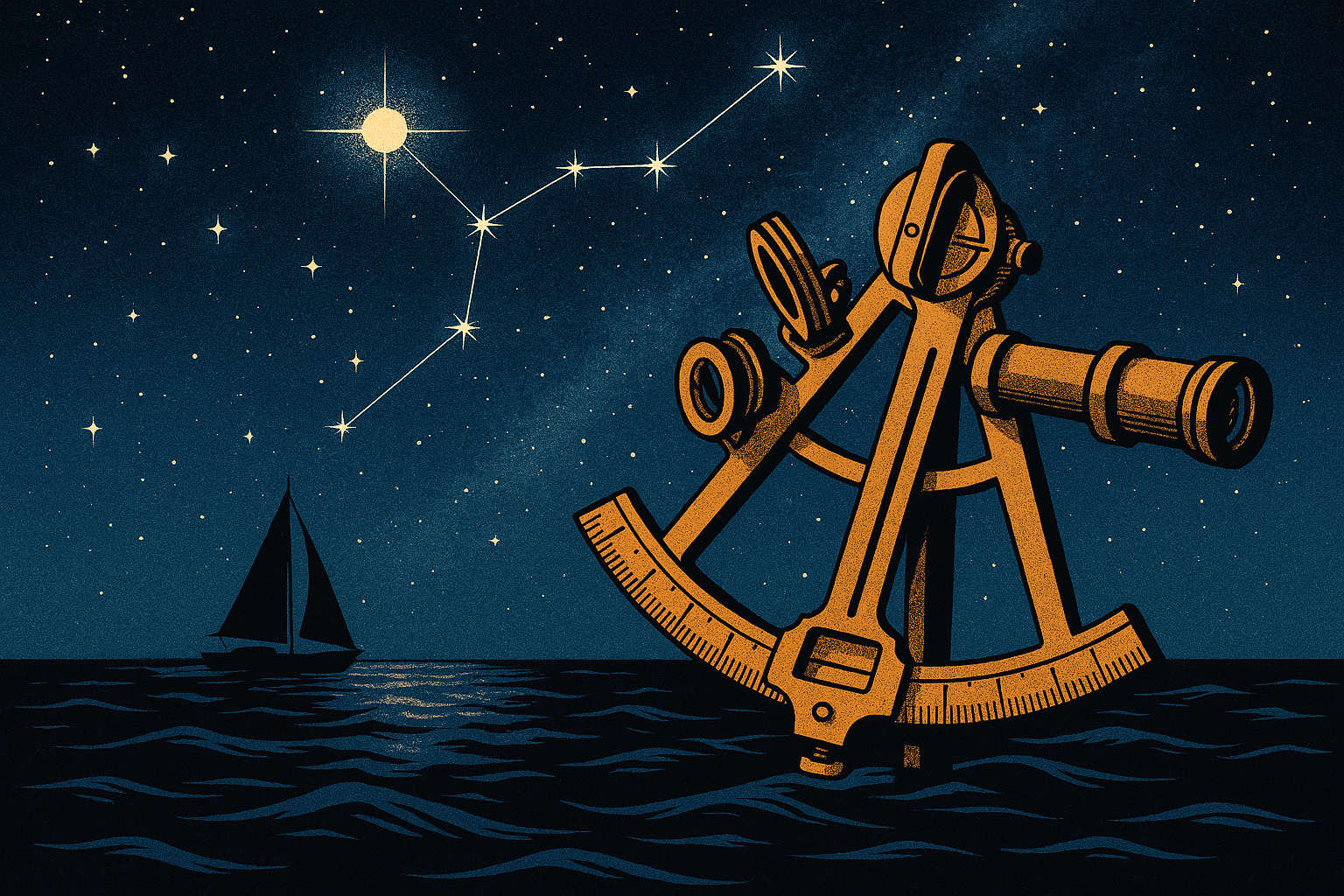
Start with a sextant. It measures angles between celestial bodies and the horizon. Add a nautical almanac for star positions. A reliable timepiece is critical because timing equals accuracy. These tools may seem old-school, but they’re lifesavers when tech fails. Practice during calm conditions. Begin by identifying major stars like Polaris. Use your sextant to measure altitude. Compare readings with your almanac. Over time, you’ll plot positions with confidence. Celestial navigation transforms boating into an adventure, blending science, art, and math. I know. Not STEM but SAM!
The Thrill of Navigating by the Stars
Imagine cruising under a clear night sky and the GPS screen goes dark. Panic? Not if you know celestial navigation. This skill turns uncertainty into confidence. It’s like unlocking a secret language written in the heavens. Every star becomes a waypoint guiding you home. Learning celestial navigation isn’t just practical—it’s empowering. You’ll feel connected to explorers who crossed oceans without electronics. That sense of mastery adds depth to every boating trip. Instead of relying on fragile tech, you rely on knowledge that never fails.
Common Mistakes and How to Avoid Them
Many beginners rush the process. They skip practice and expect instant accuracy. That’s a mistake. Celestial navigation demands patience. Start small. Measure one star. Record your reading and compare it with your chart. Over time, precision improves. Another mistake? Ignoring timekeeping. Even a few seconds off can throw your position miles away. Always check your watch before taking a sight. Modern boating feels effortless, but that ease creates dependency. When tech fails, most boaters freeze. Don’t be one of them. Celestial navigation gives you control when conditions change. It’s not just a backup—it’s a badge of skill. Plus, it’s fun. Few things beat the satisfaction of plotting your course using nothing but the stars.
Did you enjoy this blog? Visit our Boaters Blog for more! Here is an article by the US Naval Institute regarding Celestial Navigation.