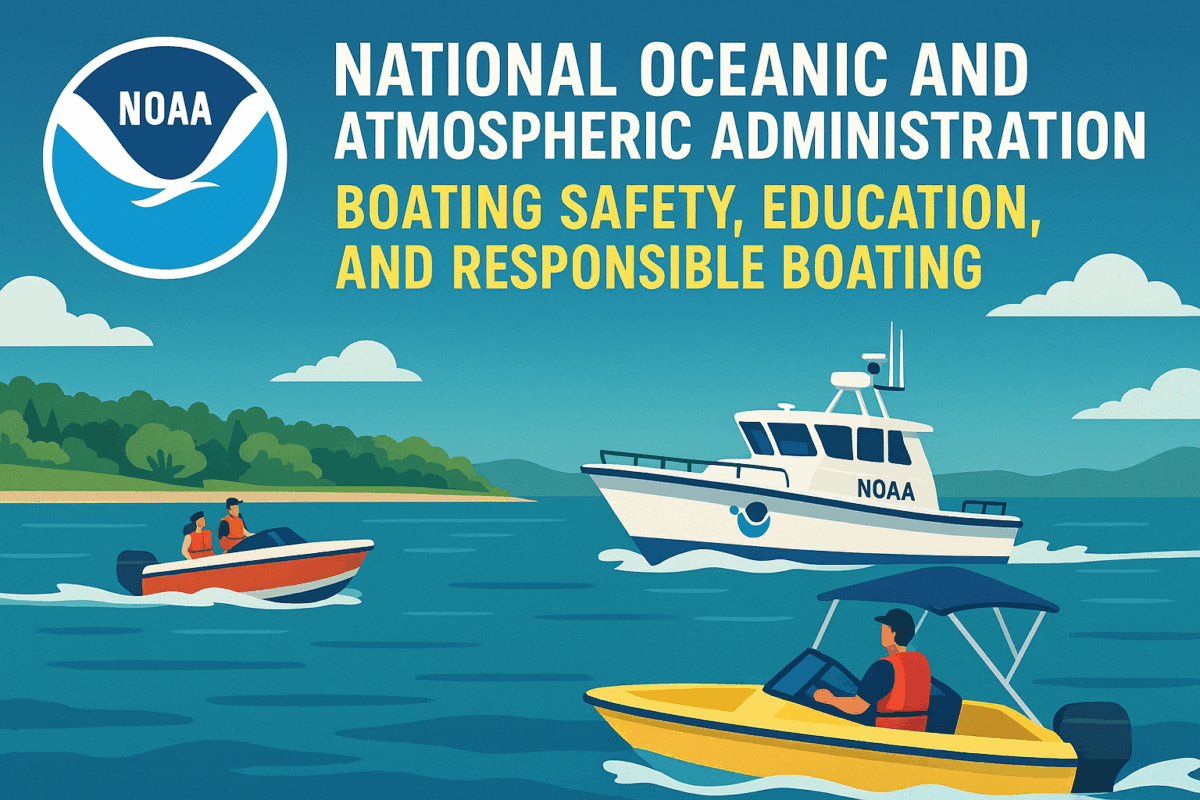
A NOAA patrol vessel monitoring coastal waters, promoting boating safety, education, and certification for responsible and smart boating practices. NOAA Long Island Sound Nautical Charts Overview The NOAA Long Island Sound Nautical Charts image displays detailed electronic chart data for safe navigation across coastal waters. Chart features include depth contours, shoreline details, and aids to navigation. Because accuracy matters, these charts support both recreational and commercial mariners. Navigational Safety Mariners in the image use NOAA ENCs to avoid hazards and plan efficient routes. Real-time positioning enhances safety. As a result, grounding risks decrease. Charting Technology The image highlights NOAA’s shift from paper charts to digital formats. Therefore, users benefit from weekly updates and customizable layouts. Using NOAA Long Island Sound Nautical Charts Understanding NOAA Long Island Sound Nautical Charts helps boaters navigate confidently. Learn more at NOAA Marine Navigation NOAA Chart Number One Overview The NOAA Chart Number One image displays a reference guide showing nautical chart symbols, abbreviations, and terms. It includes side-by-side comparisons of paper and electronic chart symbology. Because clarity matters, this chart helps mariners interpret navigation data accurately. Symbol Reference in Action Mariners in the image use NOAA Chart Number One to identify buoys, depth contours, and restricted areas. As a result, navigation becomes safer. Educational Utility The image highlights how students and instructors use the chart for training. Therefore, it supports both recreational and professional learning environments. Why NOAA Chart Number One Matters Understanding NOAA Chart Number One improves chart reading skills. Learn more at NOAA Chart No. 1. NOAA’s Interactive Global Charts Overview The NOAA’s Interactive Global Charts image displays a digital world map with layered nautical data and real-time satellite overlays. Users can zoom, pan, and select regions to access detailed chart information. Because accuracy matters, the system supports safe navigation and environmental monitoring. Real-Time Data Access Mariners in the image use NOAA’s Interactive Global Charts to view updated ENC data, weather overlays, and oceanographic conditions. As a result, voyage planning improves. Charting Innovation The image highlights NOAA’s shift to digital navigation tools. Therefore, users benefit from weekly updates and customizable chart formats. Why NOAA’s Interactive Global Charts Matter Understanding NOAA’s Interactive Global Charts enhances safety and efficiency. Learn more at NOAA Interactive Catalog. NOAA Coast Pilot Overview The NOAA Coast Pilot image shows a mariner referencing a printed volume alongside electronic charts on a navigation console. The book includes channel descriptions, tide data, and federal regulations. Because accuracy matters, the Coast Pilot supplements nautical charts with critical details. Navigational Support Mariners in the image use the NOAA Coast Pilot to verify bridge clearances and anchorage locations. As a result, voyage planning improves. Historical Significance The image highlights the Coast Pilot’s 200-year legacy. Therefore, it remains a trusted resource for coastal navigation. Why NOAA Coast Pilot Matters Understanding the NOAA Coast Pilot enhances safety and compliance. Learn more at NOAA Coast Pilot. NOAA Homepage Overview The NOAA Homepage image displays a vibrant dashboard featuring weather, climate, ocean, satellite, and fisheries data. Navigation menus highlight NOAA’s mission areas. Because accessibility matters, the homepage offers quick links to forecasts, research, and educational resources. Interactive Features Users in the image explore the NOAA Homepage to access flood mapping tools, hurricane updates, and marine charting services. As a result, decision-making improves. Public Engagement The image shows students, scientists, and boaters using NOAA’s site for learning and planning. Therefore, it supports diverse communities nationwide. Why the NOAA Homepage Matters Understanding the NOAA Homepage helps users stay informed. Visit NOAA.gov for more subjects like NOAA Weather Radio, NOAA Education, BLA Organizations, NOAA 8 Boating Safety Tips, NOAA Be Kind to Nature, NOAA Coast Pilot Books, NOAA Electronic Navigational Charts, NWS Video Library, Climate Data Online, Do We Need Lighthouses, NOAA Blue IQ, Ocean to Atmosphere, Women of NOAA, NOAA Sanctuaries, The Best Weather Website, NOAA Marine Debris Program, NOAA Interactive Maps, ADVs, NOAA's Explainers, NOAA’s SWFO-L1 observatory, NOAA's Wildest Missions, NOAA's Climate Q&A, NOAA Sail Drones, NOAA Planes Inside Hurricanes, NOAA Charting Geodetic Framework, NOAA Deep Ocean Mapping, NOAA NEON Stratus Project, NOAA and Citizen Science,

NOAA NEON Stratus Project

In by admin

NOAA NEON Stratus Project: Advancing Environmental Research

The NOAA NEON Stratus Project focuses on cutting-edge environmental monitoring. It combines advanced technology with scientific expertise to track climate trends. Researchers gather data on air quality, precipitation, and ecosystem health. This information supports accurate forecasting and resource management. Moreover, the project strengthens collaboration among agencies and universities. Its mission is clear: improve understanding of environmental change.

Why this Matters

Environmental shifts affect communities and economies. The NOAA NEON Stratus Project provides tools to predict these changes. By analyzing atmospheric patterns, scientists identify risks early. Consequently, decision-makers can act before problems escalate. In addition, the project promotes sustainable practices through data-driven insights. Its work benefits agriculture, water management, and public health initiatives.

Technology Driving the NOAA NEON Stratus Project

Innovation powers this initiative through the use of sensors, satellites, and cloud-based platforms. These tools deliver real-time data for researchers worldwide. Furthermore, automated systems reduce errors and improve efficiency. As technology evolves, the project adapts quickly to maintain accuracy. This commitment ensures reliable information for critical environmental decisions.

Community Engagement and Education

Public awareness is essential for success. The project shares findings through workshops and online resources. These programs teach communities about climate resilience and conservation. Additionally, partnerships with schools inspire future scientists. By fostering education, the project builds a knowledgeable and proactive society. This outreach strengthens global efforts to protect ecosystems.

Future Goals and Global Impact

These efforts aim to expand its reach. Plans include integrating more data sources and enhancing predictive models. As a result, researchers will gain deeper insights into climate dynamics. Moreover, global collaboration will amplify its impact on sustainability. This forward-thinking approach ensures long-term benefits for both nature and humanity.

Having better, stronger, more accurate predictions will in fact save lives. Detecting early warnings is paramount.

The Helm for all boaters CT DEEP, NASBLA, NOAA, USCG, WSIA